
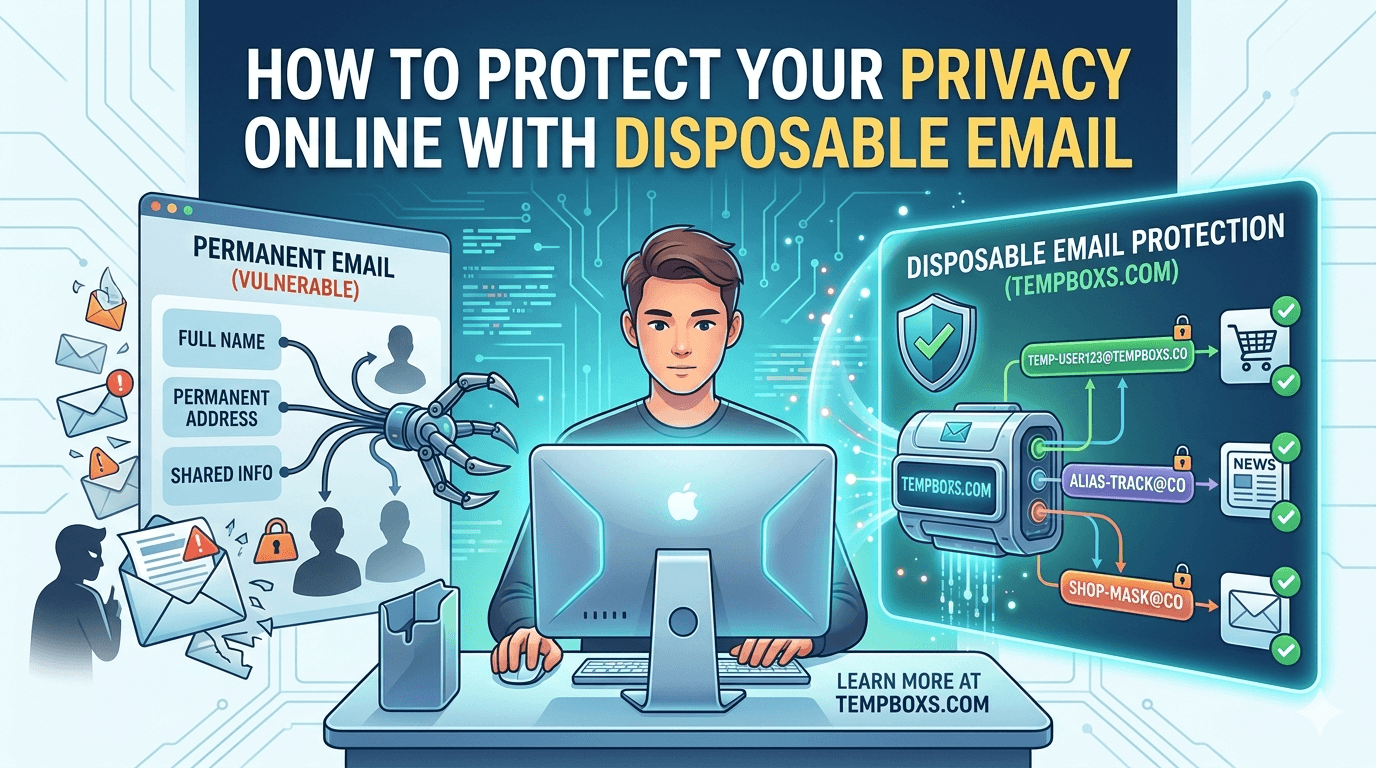
A Privacy and Security Toolkit for Safer Signups
Build a practical browser-only workflow with temporary email, generated passwords, URL cleaning, header review, and tracking-pixel checks.
Review raw email headers for useful phishing and deliverability clues: from, reply-to, return-path, SPF, DKIM, DMARC, and received-chain signals.
Waiting for raw headers.
Missing
Missing
Missing
Not found
Not found
Not found
Not found
Not found
Not found
0 delivery hops found.
No Received headers found yet.
Email headers are the technical envelope around a message. They include routing hops, sender fields, authentication results, mail client details, and identifiers used by mail servers.
Headers do not prove intent by themselves, but they can reveal useful warning signs when a message looks suspicious or when a test email is not arriving as expected.
The visible From address is what most people notice first. Reply-To controls where replies go, and Return-Path is often used for bounces. In legitimate email these fields can differ, but unexpected mismatches deserve attention.
For example, a message that claims to be from a bank but sends replies to a free webmail account is a stronger phishing signal than the display name alone.
A header analyzer is a review tool, not a guarantee. Forwarding, mailing lists, help desks, and CRM systems can create complicated but legitimate headers.
Use header analysis alongside normal safety habits: verify the domain, avoid unexpected attachments, do not paste one-time codes into surprise login pages, and use a password manager to catch fake domains.
Headers are parsed locally in your browser. tempboxs does not receive pasted email headers or message metadata.
Compare From, Reply-To, and Return-Path fields to find obvious identity mismatches.
Extract SPF, DKIM, and DMARC mentions from Authentication-Results when they are present.
Count Received headers and inspect the first few hops without uploading message metadata.
Learn more about privacy, tracking, passwords, and safer signups.
Build a practical browser-only workflow with temporary email, generated passwords, URL cleaning, header review, and tracking-pixel checks.

Learn how From, Reply-To, Return-Path, Received, SPF, DKIM, and DMARC headers can help you investigate suspicious emails safely.
Phishing scams are more sophisticated than ever. Learn the exact indicators cybersecurity experts use to detect fake emails and protect their accounts.

How engineers and growth teams use throwaway addresses to verify flows, catch odd traffic, and keep production mailboxes clean.
Review content quality, policy pages, ad placement, crawlability, and technical files before AdSense checks.
Generate a Google AdSense ads.txt line and check pasted authorized-seller records locally before publishing.
Generate random UUID v4 identifiers in your browser, copy one value, or create a small batch for testing.
Convert Unix timestamps, milliseconds, ISO dates, and local-readable times locally in your browser.
Paste page HTML to inspect title tags, meta descriptions, canonical URLs, robots directives, Open Graph tags, and JSON-LD locally in your browser.
Generate JSON-LD schema markup for articles, FAQ pages, web pages, and browser tools locally before publishing.
Draft Open Graph and Twitter card preview tags locally for articles, tools, landing pages, and social shares.
Generate an llms.txt draft for AI discovery with public pages, useful tools, safety notes, and crawling guidance.
Generate sitemap XML from public URLs and check duplicate or invalid entries locally before publishing.
Paste robots.txt rules to test whether a URL path appears allowed or blocked for Googlebot, Bingbot, or another crawler locally in your browser.
Decode JWT headers and payloads locally in your browser, inspect claims, and learn what still needs verification.
Check password length, character variety, common patterns, and estimated guess resistance locally in your browser.
Paste email HTML to find likely tracking pixels, remote images, and marketing links locally in your browser.
Convert common YAML snippets into formatted JSON locally in your browser for configs, docs, and API examples.
Parse browser, operating system, device, engine, and bot hints from user agent strings locally in your browser.
Parse a URL into protocol, origin, hostname, port, path, query parameters, hash, and decoded components locally in your browser.
Encode URL text into percent-escaped values or decode encoded URLs locally in your browser.
Clean tracking parameters from links, decode common redirect URLs, and inspect domains locally in your browser.
Look up common DNS record types, purposes, examples, and setup notes locally in your browser.
Build campaign URLs with UTM source, medium, campaign, term, and content parameters locally in your browser.
Format, minify, and validate JSON locally in your browser with clear error feedback.
Encode HTML-sensitive characters or decode named and numeric entities locally in your browser for docs, blog posts, comments, and support replies.
Test JavaScript regular expressions, flags, matches, indexes, and capture groups locally in your browser.
Look up common file extensions, MIME types, categories, and delivery notes locally in your browser.
Preview Markdown headings, lists, links, inline styles, and code blocks locally in your browser before publishing docs or guides.
Generate a browser-only privacy checklist for signups, support tickets, link sharing, and publishing workflows.
Count words, characters, sentences, paragraphs, reading time, speaking time, and repeated terms locally in your browser.
Check foreground and background hex colors against common WCAG contrast thresholds locally in your browser.
Explain five-field cron expressions locally in your browser with readable field meanings and schedule warnings.
Convert CSS px, rem, em, and percent values locally in your browser with adjustable root and parent font sizes.
Convert CSV or tabular spreadsheet exports into formatted JSON locally in your browser with header and delimiter controls.
Convert text into lowercase, uppercase, title case, sentence case, slug, snake_case, kebab-case, camelCase, and PascalCase locally in your browser.
Look up common HTTP status codes, meanings, categories, and troubleshooting notes locally in your browser.
Encode plain text to Base64 or decode Base64 back to UTF-8 text locally in your browser.
Generate SHA-256, SHA-384, and SHA-512 hashes for text or local files without uploading them.
No. The analyzer runs locally in your browser and does not send pasted headers to tempboxs.
No. It highlights technical clues, but phishing decisions need context, domain checks, message content review, and safe handling of links or attachments.
Not every copied header includes Authentication-Results. Some email clients hide technical headers unless you choose an option such as Show original or View source.
Yes. Newsletters, support desks, and mailing lists often use different bounce and reply domains. Treat mismatches as a clue to investigate, not automatic proof of abuse.