
AdSense Readiness Checklist: Content, Policies, Ads, and Crawlability
A practical review framework for preparing a useful website for AdSense checks without treating any checklist as an approval guarantee.
- #adsense
- #monetization
- #policy
- #seo
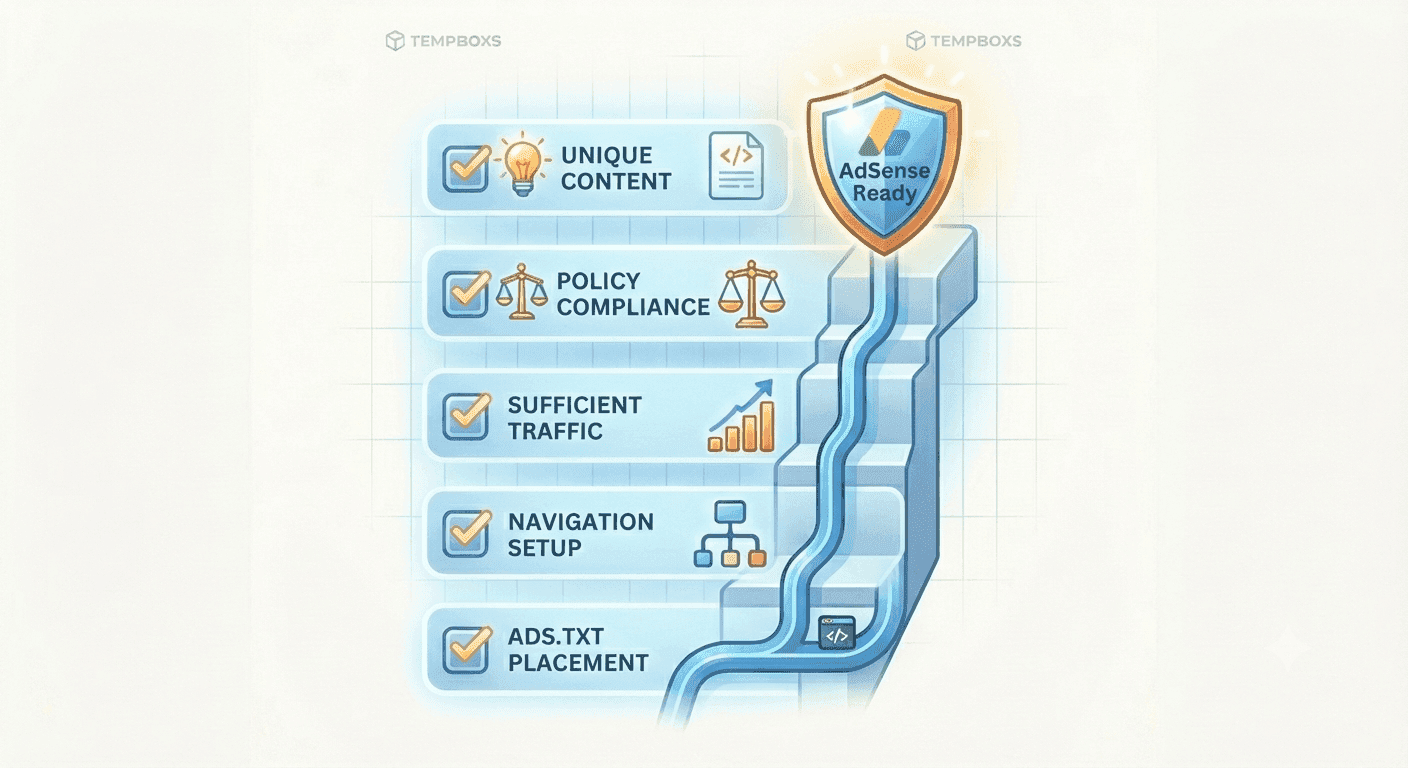
Readiness is broader than adding ad code
A site that wants to monetize with AdSense needs more than a publisher ID and an ad slot. The public pages should offer useful content, clear navigation, transparent policies, and a good experience before ads appear.
For a utility website, that means the tools should work, guides should explain real workflows, and users should understand what data is handled locally, temporarily, or by third-party services.
Review content value first
Start with the main reason someone visits the site. If the page promises a tool, the tool should be visible and usable. If the page promises a guide, it should include original guidance, examples, and clear next steps.
Google Publisher Policies include inventory quality expectations, so pages with little publisher content, under-construction layouts, or copied material are risky places for ads.
- Make the primary tool or guide easy to find
- Add helpful explanations and FAQs where they genuinely help
- Remove placeholder sections and broken links
- Avoid pages made only to hold ads
Check policies and accountability
A privacy policy should clearly describe cookies, analytics, ads, and data handling. Contact, terms, about, editorial, and transparency pages help users and reviewers understand who operates the site and how issues can be reported.
For privacy-focused tools, explain which actions happen locally in the browser and which workflows use server-side data.
Review ad placement carefully
AdSense guidance warns against invalid clicks, asking users to click ads, misleading ad labels, and ad layouts that harm the user experience. Ads should be clearly separate from navigation, buttons, tool output, and article content.
Do not put ads on private, empty, or low-content screens. Keep private message routes, API routes, and error states outside normal ad placements.
Verify crawl and publisher files
Before review, check robots.txt, sitemap.xml, ads.txt, metadata, schema markup, and canonical URLs on the production domain. Local checks are useful, but crawlers and ad platforms evaluate the deployed site.
A sitemap helps public pages be discovered. ads.txt helps authorized seller verification. robots.txt should not accidentally block important public pages.
Where tempboxs fits
The tempboxs AdSense Readiness Checklist creates a private review report in your browser. It does not upload checklist answers or site notes.
Use it with the ads.txt Generator, Sitemap Generator, Robots.txt Tester, Meta Tag Analyzer, Schema Markup Generator, Open Graph Preview Generator, and llms.txt Generator during a final publishing pass.
Related tempboxs tools
Put the guide into practice with browser-only utilities that keep pasted values on your device.