
The True Cost of 'Free' Newsletters: How Your Email is Sold to Advertisers
Think that free morning newsletter is completely free? Discover how modern newsletter networks rent, share, and sell subscriber databases to data brokers.
- #privacy
- #newsletters
- #advertising
- #data
The boom of the newsletter economy
In recent years, the way we consume media has shifted. Instead of browsing traditional news websites or scrolling through algorithmic social feeds, millions of users have turned to curated, free email newsletters delivered directly to their inboxes every morning.
These publications cover everything from tech trends and financial markets to productivity hacks and local news. They are highly engaging, clean, and best of all, free to read. But as the old adage goes: if you are not paying for the product, you are the product. In the newsletter industry, your active, engaged email address is the ultimate commodity.
How free newsletters monetize your attention
Running a high-quality newsletter requires editorial staff, curation tools, and delivery infrastructure, all of which cost money. To maintain a free model, publishers rely on complex, behind-the-scenes monetization strategies.
Here are the primary ways free newsletters generate revenue from your subscription:
- Direct Sponsorships: Displaying native ads or sponsored sections within the body of the email.
- List Rental: Allowing partner companies to send promotional campaigns directly to the newsletter's subscriber database.
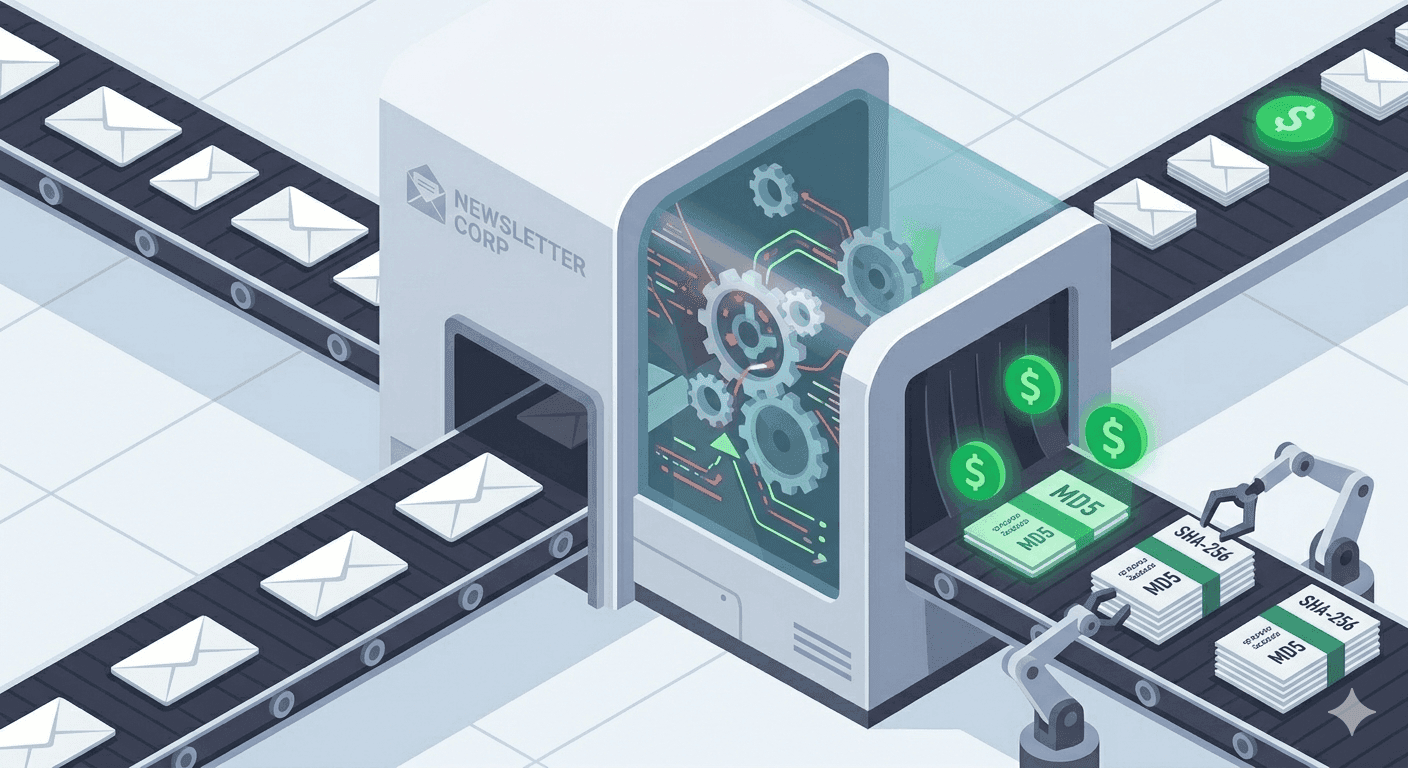
- Hashed Email Matching: Uploading subscriber lists to ad networks (like Meta or Google) to help advertisers target those same users with online display ads.
- Database Sales: Packaging demographic and behavior data (who opens what links) and selling it to larger media conglomerates or data brokers.
What is a 'hashed email' and why is it dangerous?
One of the most privacy-invasive monetization practices is the sharing of 'hashed' email addresses. When a newsletter publisher wants to share their subscriber database with an ad network without exposing raw text, they convert your email into a cryptographic hash (typically using MD5 or SHA-256 protocols).
For example, `[email protected]` becomes a unique string of characters like `55e63d...`. Because this hash is consistent, other websites that also hash your email can match it. Ad networks use these hashes as a cross-platform tracking token, bypassing browser privacy settings to connect your reading habits with your shopping behavior, location, and real identity across the web.
How to enjoy newsletters without the privacy hangover
You do not have to completely unsubscribe from your favorite writers to protect your digital footprint. By adopting a few smart inbox strategies, you can read curated content safely.
Here is how to isolate your reading lists from your personal identity:
- Create a dedicated, secondary email address solely for newsletter subscriptions, keeping it entirely separate from your bank, work, and personal accounts.
- Use a temporary disposable email when checking out a new newsletter for the first time. This lets you evaluate the content for a few days without entering a permanent marketing funnel.
- Read newsletters on the publisher's public web archive if available, using a privacy-focused browser with ad and tracker blockers enabled.
- Regularly review your newsletter subscriptions and ruthlessly delete accounts you no longer read to shrink your exposed digital footprint.